Introduction
Finding the right support for your cellular health often leads to one specific molecule: glutathione. Frequently called the "master antioxidant," this compound is produced naturally within your body to help protect cells from daily wear and tear. However, as you begin researching how to support your levels, you will likely encounter several different labels, specifically "glutathione" and "reduced glutathione."
At Cymbiotika, we believe that wellness starts with understanding exactly what you are putting into your body. Choosing between these terms can feel like navigating a maze of technical jargon, but the distinction is simpler than it seems. This article will explore the functional differences between these forms and, more importantly, explain why the way a supplement is delivered to your cells matters far more than the label on the bottle.
We will cover how glutathione works in the body, the "recycling" process that keeps your defenses strong, and how to identify a supplement that your body can actually use. Our goal is to help you move past the marketing noise and focus on what truly impacts your daily vitality.
Quick Answer: Reduced glutathione (GSH) is the active, functional form of the antioxidant that your body uses to neutralize free radicals. While "glutathione" is often used as a general term, "reduced glutathione" refers specifically to the form that is ready to work at a cellular level.
What Is Glutathione?
To understand which form is better, we must first look at what this molecule actually is. Glutathione is a tripeptide, which is a fancy way of saying it is a small protein made of three specific amino acids: cysteine, glycine, and glutamic acid. Unlike many other antioxidants that you must get from your diet, like Vitamin C, your body produces its own glutathione primarily in the liver.
It is present in nearly every cell in the human body. Its primary role is to act as a shield against oxidative stress—the internal damage caused by unstable molecules called free radicals. When free radicals go unchecked, they can disrupt cellular function and speed up the natural aging process. Glutathione steps in to neutralize these molecules, keeping your internal environment balanced and resilient.
Beyond its role as a protector, it is also a vital player in your body’s natural filtration systems. It helps the liver bind to unwanted compounds, making them easier for the body to process and remove. Because it is so central to energy production and cellular maintenance, having optimal levels can help you feel more vibrant and clear-headed throughout the day.
Understanding the Forms: GSH vs. GSSG
When you ask whether glutathione or reduced glutathione is better, you are essentially asking about the state of the molecule. In the body, glutathione exists in a constant cycle between two states: reduced and oxidized.
Reduced Glutathione (GSH)
This is the "active" form. When glutathione is in its reduced state, it has an extra electron ready to give away. Think of it like a fully charged battery or a fresh sponge ready to soak up a spill. When a free radical threatens a cell, the reduced glutathione donates its electron to neutralize the threat. This is the form you want to see on a supplement label because it is the version that is ready to provide immediate antioxidant support.
Oxidized Glutathione (GSSG)
Once the reduced glutathione has given away its electron, it becomes oxidized. In this state, it is no longer active as an antioxidant. It is like a sponge that is already full or a battery that has been drained. Under normal, healthy conditions, your body uses a specific enzyme to "recharge" this molecule, turning it back into the reduced form so it can go back to work.
Key Takeaway: The ratio of reduced glutathione to oxidized glutathione is a primary indicator of cellular health. A high level of the reduced form (GSH) suggests your body is effectively managing oxidative stress, while a build-up of the oxidized form (GSSG) suggests your defenses are being overworked.
L-Glutathione vs. Reduced Glutathione: Is There a Difference?
You may also see the term L-Glutathione on supplement facts panels. This can add another layer of confusion, but it is actually just a more technical way of describing the molecule's structure.
The "L" refers to the stereochemistry (the 3D shape) of the molecule. In nature and in the human body, amino acids almost always exist in the "L" form. Therefore, L-glutathione and reduced glutathione are effectively the same thing when you are looking at high-quality supplements. Both refer to the active, bioavailable form of the antioxidant that your body recognizes and uses.
When companies use the generic term "glutathione," they are usually referring to the reduced form, but they may be less specific about the purity or the exact molecular state. Looking for "Reduced L-Glutathione" is simply a way to ensure you are getting the specific, active version of the molecule.
Why Bioavailability Is the Real Question
The debate over "glutathione vs. reduced glutathione" often misses the most important factor in supplementation: bioavailability. Bioavailability refers to how much of a substance actually reaches your bloodstream and cells after you swallow it.
Standard glutathione capsules often have very poor bioavailability. Because glutathione is a protein (a tripeptide), your digestive system sees it as food. When you take a traditional glutathione pill, your stomach acid and digestive enzymes may break the molecule down into its three component amino acids before it ever reaches your bloodstream. By the time it is absorbed, it is no longer the "master antioxidant"—it is just a small amount of protein.
This is where the distinction between supplement brands becomes critical. It does not matter how much "reduced glutathione" is on the label if your stomach destroys it within minutes. To solve this, advanced delivery methods are required.
The Liposomal Difference
We utilize liposomal delivery to solve the problem of poor absorption. A liposome is a tiny, microscopic bubble made of phospholipids—the same material that makes up your own cell membranes. By encapsulating the reduced glutathione inside these lipid layers, we create a protective "shield."
- Protection: The liposome protects the glutathione from the harsh environment of the stomach.
- Mimicry: Because the liposome looks like a cell membrane, your body recognizes it and allows it to pass through the intestinal wall more easily.
- Cellular Delivery: The liposome can merge directly with your cells, delivering the glutathione exactly where it is needed most.
Bottom line: A lower dose of liposomal glutathione is often more effective than a high dose of standard powder because your body can actually absorb and use what it takes in.
| Feature | Standard Glutathione | Liposomal Glutathione |
|---|---|---|
| Form | Usually Reduced (GSH) | Reduced (GSH) |
| Digestion | Easily broken down by stomach acid | Protected by lipid layers |
| Absorption | Poor / Low | High / Efficient |
| Cellular Reach | Limited | Direct delivery to cells |
| Value | Low (much is wasted) | High (highly bioavailable) |
The Role of Glutathione in Daily Wellness
Why is maintaining high levels of the reduced form so important for your routine? Because glutathione touches almost every aspect of how you feel on a daily basis.
Supporting Your Natural Filtration
Your liver is the most "glutathione-hungry" organ in your body. It uses this antioxidant to perform Phase II conjugation, a process where the liver attaches glutathione to toxins to make them water-soluble. This allows your body to flush them out through your kidneys or gut. If your glutathione levels are low, your liver may struggle to keep up with the demands of modern life.
Promoting a Healthy Glow
Many people find that consistent glutathione levels support skin clarity and brightness. This is not about changing your natural skin tone, but rather about supporting the skin's ability to defend itself against environmental stressors like UV rays and pollution. By neutralizing free radicals at the skin level, glutathione can help maintain a more even, healthy-looking complexion.
Sustaining Energy and Mental Clarity
Your mitochondria—the powerhouses of your cells—are extremely sensitive to oxidative stress. Because they produce energy, they also produce free radicals as a byproduct. Glutathione stays inside the mitochondria to clean up these byproducts. When your mitochondria are protected, they can produce energy more efficiently, which many people experience as improved stamina and fewer "brain fog" moments.
Factors That Deplete Your Natural Stores
Your body is designed to produce its own glutathione, but several factors can drain your internal "battery" faster than you can recharge it.
- Aging: Natural production begins to decline as we get older, often starting as early as our late 20s.
- Environmental Stress: Exposure to pollutants, heavy metals, and persistent chemicals increases the demand for glutathione.
- Lack of Sleep: Deep sleep is when your body focuses on cellular repair and "recharging" its antioxidant stores.
- Poor Nutrition: Without enough sulfur-rich foods or the specific amino acid precursors (cysteine, glycine, glutamate), your body cannot build the molecule.
- Stress levels: High levels of physical or mental stress create more free radicals, which burns through your reduced glutathione more quickly.
If you find yourself constantly tired or feeling like your body is struggling to recover from daily stress, it may be a sign that your body is using its glutathione faster than it can replace it.
How Your Body Produces and Uses Glutathione
While we often focus on supplements, it is helpful to understand the "team" that helps glutathione work. Your body does not work in isolation; it uses a variety of nutrients to keep the glutathione cycle moving.
- Selenium: This mineral is a key component of the enzyme (glutathione peroxidase) that allows glutathione to neutralize free radicals. Without enough selenium, your glutathione cannot do its job.
- Vitamin C and E: These antioxidants work in a relay race. Vitamin C can actually help "recharge" spent glutathione, while glutathione helps regenerate Vitamin C.
- Alpha Lipoic Acid: Often called the "antioxidant's antioxidant," this compound helps the body recycle glutathione back into its active, reduced state.
- Sulfur-Rich Foods: Garlic, onions, and cruciferous vegetables (like broccoli and kale) provide the sulfur necessary for glutathione synthesis.
Key Takeaway: Glutathione works best as part of a complete nutritional strategy. Supporting it with cofactors like selenium and Vitamin C ensures that once you absorb the glutathione, your body can keep it in its active, reduced form for as long as possible.
Choosing the Right Supplement for Your Routine
If you decide to add a glutathione supplement to your day, you want to ensure it aligns with your goals for transparency and quality. At Cymbiotika, we suggest looking for three main pillars:
1. Form Matters
Always ensure the label specifies "Reduced Glutathione" or "GSH." This ensures the molecule is in its active state. Avoid generic "glutathione" labels that do not clarify the molecular state.
2. Delivery Is Everything
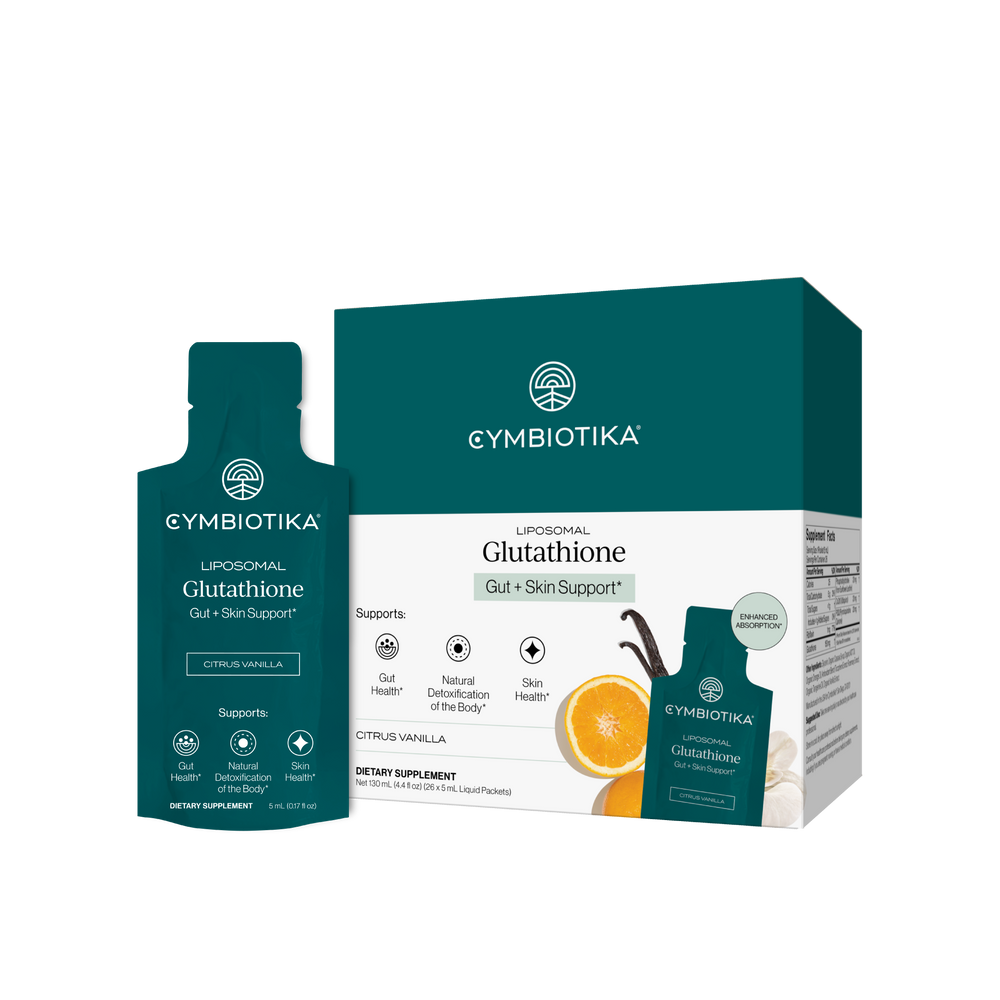
As we have discussed, standard capsules are often a waste of resources. Look for Liposomal Glutathione. Our Liposomal Glutathione uses a phospholipid shell to support absorption at the cellular level. This is not just a marketing term; it is a fundamental design choice to ensure the product actually works.
3. Purity and Testing
The supplement industry can sometimes be opaque. You should choose a brand that prioritizes third-party testing for purity and potency. We ensure our formulations are non-GMO, organic where possible, and free from unnecessary synthetic fillers or flavors.
How to Incorporate Glutathione into Your Day
Building a routine is about consistency over intensity. You do not need to take a massive dose once in a while; you need a steady supply to support your body's daily needs.
Step 1: Timing is key. Many people find that taking glutathione on an empty stomach is most effective. Taking it about 15–20 minutes before your first meal of the day allows the liposomes to be absorbed without competing with food for digestion.
Step 2: Start slowly. If you are new to high-absorption antioxidants, start with the recommended dose and see how you feel. Some people notice an immediate shift in energy, while for others, the benefits build over several weeks as cellular stores are replenished.
Step 3: Pair it with a healthy lifestyle. A supplement is designed to supplement a healthy foundation. Prioritize getting 7–9 hours of sleep and eating a diet rich in sulfur-containing vegetables to give your body the raw materials it needs to work alongside your supplement.
Step 4: Use the Health Quiz. If you are unsure how glutathione fits into your specific health goals, our Health Quiz can help you build a personalized routine based on your lifestyle, diet, and energy needs.
Conclusion
When deciding which is better—glutathione or reduced glutathione—the answer is that you always want the reduced form. It is the active, functional version of the molecule that your body uses to protect your cells, support your liver, and maintain your energy levels. However, the form is only half of the story. Without a delivery system like liposomal technology, even the best reduced glutathione may never make it past your digestive tract.
We believe that wellness starts with trust. We are dedicated to providing you with the most bioavailable, transparently sourced supplements possible. By choosing high-quality, liposomal reduced glutathione, you are not just buying a product; you are investing in a tool that helps your body perform its natural functions more effectively.
Take the next step in your wellness journey by focusing on quality and absorption. When your cells have the support they need, everything else—from your energy to your outlook—can begin to shift. If you want to keep exploring the broader category, start with our Healthy Aging Supplements collection.
Key Takeaway: Reduced glutathione is the active "worker" molecule. To ensure it reaches your cells, prioritize liposomal delivery, which protects the antioxidant from digestion and supports maximum absorption.
FAQ
Is L-glutathione the same as reduced glutathione?
Yes, for the purposes of supplementation, L-glutathione and reduced glutathione refer to the same thing. The "L" refers to the molecule’s natural structure, and "reduced" refers to its active, antioxidant state. Most high-quality supplements use L-glutathione in its reduced form.
Why is reduced glutathione considered better than oxidized glutathione?
Reduced glutathione (GSH) is the active form that can donate an electron to neutralize free radicals. Oxidized glutathione (GSSG) has already "used" its electron and is no longer active as an antioxidant. Therefore, you want to supplement with the reduced form to provide your body with immediate cellular support.
Can I get enough glutathione from food alone?
While your body can make glutathione from amino acids found in foods like meat, garlic, and broccoli, the amounts found directly in food are very small and often destroyed during cooking or digestion. Supplementation, especially in a bioavailable liposomal form, is often used to ensure optimal levels that diet alone may not provide. For a broader look at the full range of formulas, you can browse the All Products collection.
What is the best time of day to take a glutathione supplement?
Most people see the best results when taking glutathione in the morning on an empty stomach. This allows for better absorption and ensures your cells are protected against the oxidative stress you encounter throughout your daily activities. If you have a sensitive stomach, taking it with a light meal is also an option.