Introduction
Finding the right time to take your supplements can feel like solving a complex puzzle. You want to ensure that every milligram counts, especially when dealing with a powerful compound like glutathione. Often called the "master antioxidant," this molecule is central to your body's ability to manage oxidative stress and support cellular health.
At Cymbiotika, we believe that timing is only one part of the equation. While when you take a supplement matters, how your body absorbs it is the real key to seeing a difference. This post will explore whether a morning or evening routine is better for your goals and how to ensure you are getting the most out of your regimen, especially when using a high-bioavailability formula like our Liposomal Glutathione.
We will cover the science of circadian rhythms, the benefits of taking glutathione at different times, and the critical role of bioavailability. Our goal is to help you build a routine that fits your life and supports your long-term wellness, including the broader Healthy Aging supplements category.
Quick Answer: Most people find that taking glutathione first thing in the morning on an empty stomach provides the best absorption. However, taking it at night may better support the body’s natural repair processes during sleep.
What Exactly Is Glutathione?
Before we dive into the clock, it is helpful to understand what we are actually timing. Glutathione is a tripeptide, which is a fancy way of saying it is made of three amino acids: cysteine, glycine, and glutamic acid. Every cell in your body produces it, but your liver is the primary hub for its creation and distribution.
Its main job is to act as a cellular bodyguard. It neutralizes free radicals—unstable molecules that can damage your DNA and proteins. Beyond that, it supports the liver in processing toxins and helps recycle other antioxidants like Vitamin C and Vitamin E. This recycling process is why it earned its "master antioxidant" title.
As we age, our natural production of this vital molecule tends to decline. Environmental factors like pollution, poor diet, and lack of sleep can also drain our internal stores. Supplementation is a common way to bridge that gap, but the format you choose determines if it actually reaches your cells. If you want a deeper look at the delivery science, our guide on what liposomal glutathione is and why it matters is a helpful next step.
Why Timing Matters for Antioxidants
The human body operates on a 24-hour internal clock known as the circadian rhythm. This clock does not just tell you when to sleep; it regulates hormone production, digestion, and even the activity of your immune system. Because your internal chemistry changes throughout the day, the "ideal" time for a supplement depends on what you want it to do.
Antioxidant levels in the body are not static. Research suggests that glutathione activity often peaks during the night. This is because sleep is the primary window for cellular repair and detoxification. When you are resting, your body is busy "cleaning up" the metabolic waste produced during the day.
If your levels are low, your body may struggle to complete these repair tasks effectively. By choosing a specific time to supplement, you are essentially trying to align with these natural biological waves. For a broader look at how this works, the All About Liposomes guide is a useful educational companion.
Key Takeaway: Your body uses antioxidants differently in the morning than it does at night, so your supplement timing should reflect whether you want protection during the day or repair while you sleep.
The Case for Taking Glutathione in the Morning
Taking glutathione in the morning is the most popular choice for those looking for daily protection. When you wake up, your body is preparing to face a variety of environmental stressors. These include UV rays, air pollution, and the general oxidative stress that comes with physical activity and mental focus.
1. Superior Absorption on an Empty Stomach
For many, the morning offers the best window for a fasted state. Absorption is often more efficient when there is no competing food in the digestive tract. Taking your supplement about 30 minutes before breakfast allows it to pass through the stomach more quickly.
2. Daytime Cellular Support
By boosting your levels early, you provide your cells with a "shield" for the day ahead. This can be particularly helpful if you have a demanding job or live in a busy urban environment where exposure to pollutants is higher. Many people report feeling more balanced and focused when they start their day this way.
3. Synergetic Morning Stacks
If you already take Vitamin C or B vitamins in the morning, glutathione fits right in. Vitamin C specifically helps keep glutathione in its "reduced" or active state, making it more effective at neutralizing free radicals. Pairing them together creates a more robust antioxidant environment in your blood, and our Liposomal Vitamin C is designed to fit neatly into that kind of routine.
The Case for Taking Glutathione at Night
While the morning is about protection, nighttime supplementation is about recovery. If you find that your primary goal is supporting your body’s natural repair cycles or managing the effects of a busy lifestyle on your sleep quality, the evening might be your best bet.
1. Supporting the Natural Repair Cycle
As mentioned, your body does its heavy lifting while you sleep. Taking glutathione before bed may provide the extra resources your liver needs to process the toxins you encountered during the day. This aligns with the natural peak of antioxidant activity in the body.
2. Offsetting Sleep Deprivation
Lack of sleep is one of the fastest ways to deplete your glutathione stores. If you are going through a period where you aren't getting a full eight hours, supplementing at night may help mitigate some of the oxidative stress that sleep deprivation causes. It supports the "clean-up" crew even when the window for rest is shorter than usual.
3. Digestion and Comfort
Some people have sensitive stomachs and find that taking supplements in the morning causes slight discomfort. If this is you, taking your dose 2–3 hours after dinner can be a great alternative. It still allows for decent absorption while avoiding the potential for an upset stomach on an empty morning belly.
Morning vs. Night: Which Should You Choose?
| Goal | Best Time | Why? |
|---|---|---|
| Environmental Protection | Morning | Shields cells from daily stressors and pollutants. |
| Skin Brightening Support | Morning | Provides daytime defense against UV-induced oxidative stress. |
| Recovery & Detox | Night | Enhances the body's natural nighttime repair processes. |
| Better Absorption | Morning | Easier to take on an empty stomach before breakfast. |
| Convenience | Either | The "best" time is the time you will actually remember. |
Bottom line: If you want maximum absorption and daytime protection, choose the morning. If you want to support your liver's natural nighttime work, choose the evening.
The Bioavailability Factor: Why Format Trumps Timing
You could take your supplement at the mathematically perfect second, but if the formulation is poor, your body won't use it. This is the most misunderstood part of the supplement world. Most standard glutathione pills are largely destroyed by stomach acid before they ever reach the small intestine for absorption.
At Cymbiotika, we solve this problem using liposomal delivery. A liposome is a tiny, microscopic bubble made of phospholipids—the same material that makes up your own cell membranes. We wrap the glutathione molecules in this phospholipid bilayer to protect them as they travel through your digestive system.
Liposomal delivery is designed to mimic your body’s own natural cellular structure. This allows the glutathione to be absorbed more efficiently into the bloodstream and, eventually, into the cells where it is needed most. If you want a deeper dive into the delivery system itself, the Does Liposomal Glutathione Work? article breaks it down in more detail.
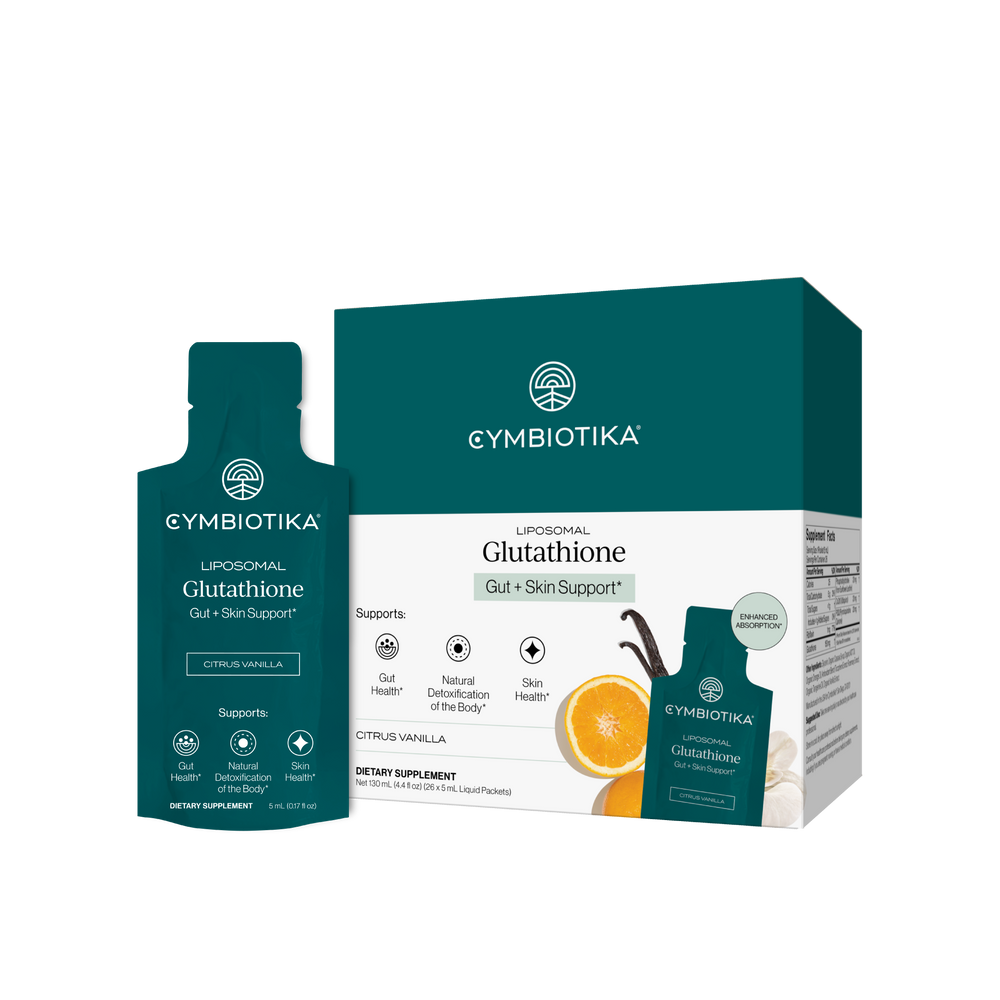
Our Liposomal Glutathione also includes cofactors like COQ10 and PQQ to further support cellular energy. When you use a delivery system like this, the strict "morning vs. night" debate becomes less critical because the body is actually receiving the payload.
Key Takeaway: Standard glutathione capsules are often broken down during digestion. Liposomal delivery uses a protective fatty layer to ensure the antioxidant actually reaches your cells.
How to Maximize Your Results
Beyond just timing and delivery, how you live your life will impact how well your supplements work. Think of a supplement as a partner to your lifestyle, not a replacement for healthy habits.
Stay Hydrated
Glutathione plays a massive role in the liver's detoxification pathways. These pathways require water to move waste products out of the body. If you are dehydrated, your body cannot efficiently process or eliminate the toxins that the glutathione is helping to neutralize. Aim for consistent water intake throughout the day.
Pair with Vitamin C
We cannot overstate the importance of Vitamin C in this process. It helps "recharge" glutathione once it has spent itself neutralizing a free radical. If you aren't getting enough Vitamin C from your diet (like citrus, peppers, and broccoli), consider a liposomal Vitamin C supplement to take alongside your glutathione.
Consistency Over Intensity
You will not see a massive change after one dose. Most studies on glutathione show that the most significant benefits—such as support for skin health or liver markers—appear after 4 to 12 weeks of consistent use. Pick a time that you can stick to every single day.
Watch Your Diet
Certain foods can naturally help your body produce more of its own glutathione. These include cruciferous vegetables (broccoli, kale, cauliflower), garlic, onions, and high-quality proteins. Avoiding excessive alcohol and processed sugars also prevents your stores from being drained unnecessarily.
Practical Steps to Build Your Routine
If you are ready to start, here is a simple way to integrate glutathione into your life:
- Choose your window: Decide between morning (protection) or night (recovery).
- Set a reminder: Use your phone or place the bottle next to your toothbrush.
- Take it correctly: If using our liposomal formula, squeeze the pouch directly into your mouth or mix it into a small amount of water or juice.
- Be patient: Commit to at least one month of daily use before evaluating how you feel.
- Listen to your body: If you feel better taking it at a different time than you originally planned, trust that signal. Results vary for everyone.
If you are still deciding where to begin, our Health Quiz can help you narrow down the best starting point for your routine.
Note: It is always a good idea to consult with your healthcare provider before starting a new supplement, especially if you are pregnant, nursing, or taking medication for a specific health condition.
Common Myths About Glutathione Timing
There is a lot of misinformation online regarding when and how to take this antioxidant. Let's clear up a few of the most common misconceptions.
Myth: You have to take glutathione every 8 hours to keep levels stable.
Fact: While glutathione has a relatively short half-life in the blood, liposomal formats stay available to the body longer. A single, consistent daily dose is usually sufficient for most wellness goals.
Myth: Taking it with food completely ruins the supplement.
Fact: While an empty stomach is "ideal" for absorption, it is not a dealbreaker. If you forget to take it before breakfast, it is much better to take it with your meal than to skip the day entirely.
Myth: You only need glutathione if you feel tired or sick.
Fact: Glutathione is a preventative tool. Its job is to maintain cellular health and prevent damage before it starts. Waiting until you feel "run down" means your stores are likely already depleted.
The Role of Precursors
Sometimes, the best way to support your levels is to give your body the building blocks it needs to make its own glutathione. One of the most important building blocks is NAC (N-Acetyl Cysteine).
NAC is a stable form of the amino acid cysteine. When you take it, your liver uses it to synthesize fresh glutathione. Many people choose to take both a glutathione supplement and an NAC-rich food or supplement to provide a "two-pronged" approach. This ensures you have an immediate supply while also supporting your body's internal production factory.
A Word on Skin Health and Timing
Many people search for the best time to take glutathione specifically for skin health and brightness. Because UV exposure happens during the day, a morning dose is generally recommended for this specific goal. By having the antioxidant present in your system during the hours of highest sun exposure, you may better support your skin's resilience against environmental damage.
However, remember that skin cells regenerate most quickly at night. This is why a "split" approach—taking it in the morning but maintaining a great evening skincare routine—often yields the best results for a healthy glow.
Conclusion
What time is best to take glutathione? For most, first thing in the morning on an empty stomach is the winner for absorption and daily protection. If your focus is on recovery and detoxification, taking it at night is a valid and science-backed alternative.
At Cymbiotika, we care less about the clock and more about the quality. We are dedicated to providing clean, transparent, and highly bioavailable formulations. By using advanced liposomal delivery, we ensure that the "master antioxidant" actually makes it into your system, regardless of whether you are a morning person or a night owl.
Wellness is a long-term journey built on small, consistent choices. Choosing a high-quality supplement and sticking to a routine is one of the most empowering things you can do for your cellular health. If you want to compare options while you build that routine, the Reduced vs. Liposomal Glutathione guide is a smart next read.
- Consistency is key: Results typically appear after 4–12 weeks of daily use.
- Bioavailability matters: Use liposomal delivery to bypass digestive degradation.
- Pair for success: Combine with Vitamin C and stay hydrated.
Key Takeaway: Whether you choose morning or night, the most important factor is using a high-absorption formula and taking it consistently every day.
To find the perfect supplement stack for your unique lifestyle and goals, we recommend taking our Health Quiz. It is designed to help you navigate the world of wellness with personalized recommendations you can trust.
FAQ
Should I take glutathione before or after a workout?
Many people prefer taking it before a workout to help manage the oxidative stress produced during intense physical activity. However, taking it after exercise can also support the recovery phase. Since consistency is the most important factor, choose the time that best fits your existing exercise routine, and consider the broader Recovery path if exercise support is a priority.
Is it safe to take glutathione every day?
Yes, glutathione is generally considered safe for daily use in recommended dosages. Because your body uses and depletes its antioxidant stores every day, consistent supplementation helps maintain a steady "shield" for your cells. If you have concerns about long-term use, consult with your healthcare provider.
Can I take glutathione with coffee?
It is best to take glutathione with water. While coffee won't necessarily "destroy" the supplement, the acidity and caffeine in coffee can sometimes speed up digestion, potentially reducing the time the supplement has to be absorbed in the small intestine. Wait 15–30 minutes after your dose before having your morning cup of coffee.
How long does it take for glutathione to work?
While some people notice a difference in energy or mental clarity within a few days, the most significant benefits usually take longer. For goals like skin health, liver support, or general immune resilience, you should expect to stay consistent for at least 30 to 90 days to see the full results. For more support in that area, you can also explore the Natural Immunity Supplements & Vitamins collection.