Introduction
Walking down the supplement aisle or browsing for wellness support can often feel like learning a second language. Many ingredients have names that sound nearly identical, leading to confusion about which one actually serves your specific goals. This is frequently the case with L-Glutamine and Glutathione, two powerhouses that are often mentioned in the same breath but perform very different roles in the body.
At Cymbiotika, we believe that understanding the "why" behind your supplements is just as important as the supplements themselves. Knowing how these two compounds interact with your biology allows you to build a routine that is both intentional and effective. While they share a similar linguistic root, one acts primarily as a building block for your tissues, while the other serves as a master protector for your cells. If you’re just beginning to explore where these ingredients fit in your routine, the Cymbiotika Expert Quiz is a helpful place to start.
This article explores the functional differences between L-Glutamine and Glutathione, how they work together, and why the way they are delivered to your system makes all the difference for your results. By the end, you will have a clear understanding of which may best support your current wellness journey and how to ensure your body actually absorbs what you take.
Understanding the Basics: Amino Acids vs. Antioxidants
To understand the difference between L-Glutamine and Glutathione, it helps to start with their chemical structure. While they are related, they belong to different categories of biological compounds. One is a singular building block, while the other is a complex protective molecule.
L-Glutamine is an amino acid. Amino acids are the fundamental components used to build proteins in the body. It is the most abundant free amino acid in human muscle and blood. Your body can produce it on its own, which makes it a "non-essential" amino acid, but during times of high physical stress or intense activity, your body may use it faster than it can create it. In these moments, it becomes "conditionally essential," meaning you may need to get more from your diet or supplementation.
Glutathione is often called the "master antioxidant." Unlike L-Glutamine, it is not a single amino acid but a tripeptide—a small protein made up of three specific amino acids: cysteine, glycine, and glutamic acid. While L-Glutamine is a precursor (a starting material) that can help the body produce Glutathione, the final molecule of Glutathione has a much different job. Its primary purpose is to neutralize free radicals, which are unstable atoms that can damage cells.
Quick Answer: L-Glutamine is an amino acid used primarily as fuel for the gut and muscles, while Glutathione is a master antioxidant designed to protect cells from oxidative stress and support detoxification. While L-Glutamine helps create Glutathione, they serve distinct roles in maintaining daily wellness.
L-Glutamine: The Gut and Muscle Specialist
L-Glutamine is best known for its affinity for the digestive tract and the muscular system. If you think of your body as a high-performance vehicle, L-Glutamine is like the high-quality fuel and the structural material used to maintain the "engine" (your gut) and the "chassis" (your muscles). For a deeper look at this role, see Cymbiotika’s guide to taking glutamine for gut health.
Supporting the Gut Barrier
One of the most critical roles of L-Glutamine is providing energy for the cells that line your small intestine, known as enterocytes. These cells form a tight barrier that decides what enters your bloodstream and what stays in the digestive tract. When this barrier is well-maintained, your digestive system functions smoothly.
Many people find that L-Glutamine supports gut comfort and helps maintain the integrity of the intestinal lining. Because these cells turn over and regenerate quickly, they have a high demand for L-Glutamine to stay healthy. If you want to explore broader digestive support options, the Gut Health Supplements collection is a natural next stop.
Muscle Recovery and Physical Stress
Beyond the gut, L-Glutamine is heavily concentrated in your skeletal muscles. During intense exercise, your body’s L-Glutamine levels can drop significantly. This is why it is a staple in many fitness routines; it may support muscle recovery and help maintain a healthy immune response after periods of physical exertion.
Bolded Key Points for L-Glutamine:
- Acts as the primary fuel source for the cells lining the digestive tract.
- Supports the integrity of the gut barrier, which is essential for overall health.
- Assists in muscle tissue repair and recovery after strenuous movement.
- Can be found naturally in protein-rich foods like beef, poultry, dairy, and beans.
Glutathione: The Master Protector
If L-Glutamine is the structural fuel, Glutathione is the security team. Found in almost every cell in the human body, its presence is a hallmark of cellular health and longevity. It is particularly concentrated in the liver, which is the body’s primary detoxification organ. For a more detailed overview of this compound, explore the healthy aging collection, where glutathione is featured as a core support formula.
Neutralizing Oxidative Stress
Every day, our bodies face "oxidative stress." This is a natural process caused by environmental factors like pollution, UV rays, and even the normal process of breathing and eating. Oxidative stress creates free radicals, which can cause wear and tear on our cells over time.
Glutathione’s job is to seek out these free radicals and neutralize them before they can cause damage. By doing so, it helps maintain the health of your mitochondria—the "power plants" of your cells—which is why many people associate healthy Glutathione levels with better daily energy.
Detoxification and Liver Support
The liver relies heavily on Glutathione to process toxins. It attaches to harmful compounds, making them water-soluble so the body can flush them out more easily. Without adequate Glutathione, the liver’s ability to filter the blood and manage metabolic waste may be less efficient.
Key Takeaway: L-Glutamine focuses on "building and fueling" the physical structures of the gut and muscles, while Glutathione focuses on "protecting and cleaning" the cells from the inside out.
Comparing L-Glutamine and Glutathione
To see how these two differ in practice, it helps to look at them across several categories. While they are "teammates" in the body, their specific use cases vary.
| Feature | L-Glutamine | Glutathione |
|---|---|---|
| Primary Category | Amino Acid | Antioxidant (Tripeptide) |
| Main Target Area | Gut lining and skeletal muscles | Liver and every individual cell |
| Core Function | Fuel for cell growth and repair | Neutralizing free radicals and detox |
| Dietary Sources | Meat, eggs, dairy, cabbage | Spinach, avocado, asparagus |
| Absorption Concern | Generally well-absorbed as a powder | Very difficult for the body to absorb orally |
| Best Delivery Form | Powder or Liposomal | Liposomal is essential for efficacy |
The Bioavailability Factor: Does Your Body Actually Absorb It?
The biggest hurdle with both of these compounds—especially Glutathione—is bioavailability. Bioavailability refers to the amount of a substance that actually enters your bloodstream and becomes available for use by your cells. For a deeper dive into the delivery science, Cymbiotika’s All About Liposomes page explains why this matters.
Many standard supplements fail because they are broken down by stomach acid or digestive enzymes before they can do their job. This is particularly true for Glutathione. If you take a standard Glutathione capsule, your digestive system often breaks it back down into its three component amino acids (including glutamic acid, which comes from L-Glutamine). While this provides your body with building blocks, you lose the specific benefits of the complete Glutathione molecule.
Liposomal Delivery: A Game-Changer for Absorption
To solve this, we utilize liposomal delivery. A liposome is a tiny, microscopic bubble made of a phospholipid bilayer—the same material that makes up your own cell membranes.
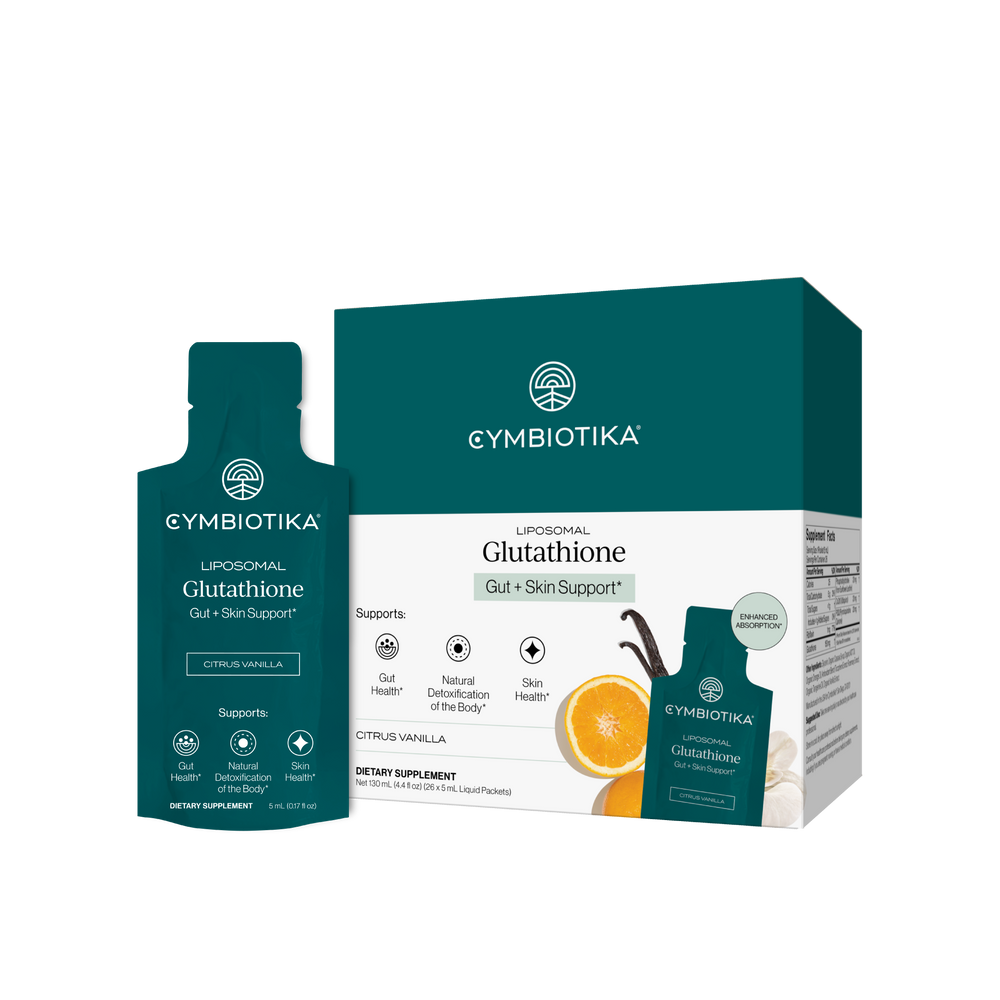
When Glutathione is "wrapped" in a liposome, it is protected from the harsh environment of the stomach. This allows the molecule to travel through the digestive system intact and be delivered directly into the cells or the bloodstream. Our Liposomal Glutathione is designed specifically with this delivery method to ensure you aren't just taking a supplement, but actually absorbing it.
Standard L-Glutamine is generally more stable in the gut, but for those focusing on deep cellular support or severe gut-barrier needs, the form still matters. Always look for clean, high-purity sources that avoid synthetic fillers that can irritate the gut.
How the Two Work Together
It is not necessarily a choice between one or the other. In fact, L-Glutamine and Glutathione work in a beautiful sequence. Since L-Glutamine is a precursor to Glutamate (one of the three components of Glutathione), having enough L-Glutamine in your system ensures your body has the raw materials it needs to manufacture its own internal supply of antioxidants.
Practical Synergy:
- L-Glutamine helps maintain a healthy gut lining, which ensures that other nutrients and supplements (including Glutathione) are absorbed properly.
- Glutathione then protects those gut cells from oxidative damage, helping the L-Glutamine do its job more effectively.
- Together, they support a cycle of "build, protect, and repair."
For readers interested in how delivery changes real-world results, Cymbiotika’s article on glutathione liposomal benefits is a useful companion read.
Real-Life Scenarios: Which One Is Right for You?
Choosing between these two depends on your current wellness priorities. While many people benefit from both, you might prioritize one based on how you feel on a daily basis.
Scenario 1: You are focused on digestive comfort
If you often feel bloated, have a sensitive stomach, or are looking to support your gut barrier, L-Glutamine is usually the primary recommendation. Because it acts as direct fuel for the intestinal walls, it helps maintain the "net" that keeps your digestive system working correctly.
Scenario 2: You are focused on energy and healthy ageing
If you feel sluggish, live in a high-pollution urban area, or want to support your body's natural defense against the passage of time, Glutathione is the standout choice. By lowering the burden of oxidative stress on your mitochondria, it may help you feel more vibrant and resilient.
Scenario 3: You have a demanding fitness routine
If you are lifting weights, running long distances, or pushing your physical limits, you likely need both. L-Glutamine will support the repair of your muscle fibers, while Glutathione will help manage the temporary increase in oxidative stress that occurs during intense physical exertion.
Myth: "All Glutathione supplements work the same way." Fact: Standard oral Glutathione is often broken down during digestion into its amino acid parts. To get the benefit of the master antioxidant itself, a liposomal delivery system is required to bypass digestive breakdown and support cellular uptake.
What to Look for in a Supplement
When selecting either L-Glutamine or Glutathione, the quality of sourcing and the absence of "junk" ingredients are paramount. Many mass-market supplements use synthetic fillers, artificial flavors, or flow agents like magnesium stearate that can actually cause the gut irritation you are trying to avoid.
At Cymbiotika, we prioritize:
- Transparency: Every ingredient is there for a reason.
- Purity: Non-GMO, third-party tested, and free from unnecessary synthetics.
- Effective Delivery: Using liposomal technology where it matters most, such as with our Glutathione.
Our Liposomal Vitamin C also includes co-factors that pair well with antioxidant-focused routines. These ingredients work alongside Glutathione to further support cellular energy and provide a multi-layered approach to wellness. We don't just provide the "fighter" (Glutathione); we provide the support system it needs to win.
Building Your Daily Routine
Adding these to your routine doesn't have to be complicated. Consistency is the most important factor in seeing long-term results.
Step 1: Identify your primary goal. If it's gut health, start with L-Glutamine. If it's cellular protection and liver support, start with Liposomal Glutathione.
Step 2: Time your intake. L-Glutamine is often taken on an empty stomach in the morning or immediately after a workout. Liposomal Glutathione is also best taken on an empty stomach—usually 15–20 minutes before your first meal—to allow for maximum absorption through the intestinal lining.
Step 3: Support with diet. Supplementation works best when paired with a nutrient-dense diet. Eat plenty of sulfur-rich vegetables like broccoli, kale, and garlic to support your body's natural production of Glutathione.
Step 4: Monitor and adjust. Wellness is not a "one size fits all" journey. Pay attention to your energy levels, digestion, and recovery times over a period of 30 days. Results vary, and it is always a good idea to consult with a healthcare provider to tailor your stack to your specific needs. If you want personalized help choosing a starting point, the Health Quiz can guide you toward a more tailored routine.
Conclusion
L-Glutamine and Glutathione are both essential for a high-functioning body, but they occupy different niches in your internal ecosystem. L-Glutamine provides the structural fuel your gut and muscles need to stay strong, while Glutathione provides the antioxidant shield your cells need to thrive in a stressful world.
By understanding the difference between these two, you can move away from "guessing" at your wellness and start building a routine grounded in science and bioavailability. Whether you are looking to support your digestive tract or boost your cellular resilience, our mission is to provide the cleanest, most effective tools to help you get there.
If you are ready to take the next step in personalizing your wellness routine but aren't sure where to begin, we invite you to take The Health Quiz. It’s designed to help you identify the specific gaps in your nutrition and recommend a custom stack that fits your unique lifestyle and goals.
Bottom line: Use L-Glutamine for gut and muscle structure; use Liposomal Glutathione for master antioxidant protection and detoxification support.
FAQ
Can I take L-Glutamine and Glutathione together?
Yes, many people find that taking both provides comprehensive support for both the gut and the immune system. Since L-Glutamine can help the body produce its own Glutathione, they work together to maintain cellular health and structural integrity.
Does L-Glutamine turn into Glutathione?
L-Glutamine is a precursor to glutamate, which is one of the three amino acids required to make Glutathione. While taking L-Glutamine may help support your body's natural production, it is not a direct replacement for taking a liposomal Glutathione supplement if your goal is high-level antioxidant support.
Why is liposomal Glutathione better than regular capsules?
Regular Glutathione capsules are often destroyed by stomach acid before they reach your cells. Liposomal delivery wraps the Glutathione in a protective layer of healthy fats, allowing it to pass through the digestive system and be absorbed directly into the bloodstream for much higher bioavailability.
Which is better for gut health?
L-Glutamine is generally considered the primary supplement for gut health because it is the preferred fuel source for the cells that line the intestinal wall. However, Glutathione can provide secondary support by reducing oxidative stress and inflammation within the digestive tract.