Introduction
Finding the right balance in a daily wellness routine often feels like a puzzle. You may already take a daily vitamin C supplement to support your immune system, but you might be hearing more about the "master antioxidant" known as glutathione. When these two are paired, they do more than just exist side-by-side. They work in a cycle that may help support your body’s natural ability to manage oxidative stress and maintain cellular health.
At Cymbiotika, we focus on the science of how nutrients actually enter your system. It is not just about what you take, but how much of it your body can actually use. Taking glutathione and vitamin C together is a strategy designed to maximize the life of these antioxidants in your body. This guide to taking vitamin C and glutathione will walk you through the timing, the delivery methods, and the reasons why this specific combination is a favorite for those looking to support their long-term vitality.
By the end of this article, you will understand how to build a routine that ensures these two powerhouses work for you, not against you.
The Science of the Antioxidant Network
To understand how to take these two together, it helps to understand their relationship. Your body is constantly managing free radicals—unstable molecules that can cause stress to your cells. Antioxidants are the "defenders" that neutralize these molecules. However, once an antioxidant does its job, it often becomes "spent" or oxidized.
Glutathione is a tripeptide made of three amino acids: cysteine, glycine, and glutamine. It is found in almost every cell in your body and is essential for detoxification and immune support. Vitamin C, or ascorbic acid, is an essential vitamin that you must get from your diet or supplements because your body cannot produce it.
When these two meet in your system, they engage in a process often called the glutathione-ascorbate cycle. Vitamin C helps "recharge" glutathione. When glutathione becomes oxidized (the "off" state), vitamin C can donate an electron to turn it back into its reduced form (the "active" state).
Key Takeaway: Vitamin C and glutathione work in a continuous loop, where vitamin C helps recycle glutathione back into its active form to extend its protective benefits.
For a deeper explanation of this relationship, explore this guide to the synergy between vitamin C and glutathione.
Why Bioavailability Matters Most
One of the biggest hurdles with glutathione is its fragility. If you take a standard glutathione capsule, much of it may be broken down by stomach acid and digestive enzymes before it ever reaches your bloodstream. This is where the concept of bioavailability—the degree to which a nutrient is absorbed and used—becomes critical.
Standard vitamin C also has limitations. The body can only absorb a certain amount of ascorbic acid at one time. Anything extra is typically flushed out through the urine. To get the most out of your routine, the delivery format you choose is just as important as the ingredients themselves.
We utilize liposomal delivery to address these absorption challenges. A liposome is a tiny, fatty bubble called a phospholipid bilayer. It mimics the structure of your own cell membranes. By wrapping glutathione or vitamin C in these lipids, the nutrients are protected as they pass through the digestive tract. This is designed to help them reach the small intestine intact, where they can be absorbed directly into the bloodstream and delivered to your cells.
Learn more about this delivery approach in our liposomal vitamin C guide.
The Best Way to Take Glutathione and Vitamin C Together
Consistency is the most important factor when building a new supplement routine. However, timing and method can influence how well these antioxidants perform.
Optimal Timing for Your Routine
Most people find the greatest benefit by taking glutathione and vitamin C in the morning. Taking them on an empty stomach, roughly 20 to 30 minutes before your first meal, may help support better absorption. This allows the liposomal spheres to move through the digestive system without competing with complex proteins or fats from food.
If you have a sensitive stomach, you can take them with a light snack. However, for the best results, aim for a consistent morning window. This sets your "antioxidant shield" for the day, helping your body manage the stressors you encounter from the environment or physical activity.
Finding the Right Ratio
There is no one-size-fits-all dosage, as everyone’s nutritional needs vary. However, many wellness enthusiasts use a 1:2 ratio. For every 250mg of glutathione, they might take 500mg of vitamin C.
The logic behind this ratio is to ensure there is enough vitamin C available to keep the glutathione recycling loop active. Vitamin C acts as the first line of defense, "sparing" the glutathione so it can focus on more complex tasks, like supporting liver health and cellular detoxification.
For additional guidance on this topic, read how much vitamin C to take with glutathione.
Format and Delivery Options
When choosing your supplements, look for "Reduced Glutathione" (GSH). This is the active form that your body can use immediately. Pair this with a high-quality vitamin C. While you can find these in powders or capsules, liquid liposomal formats are often preferred for their ease of use and superior absorption profile.
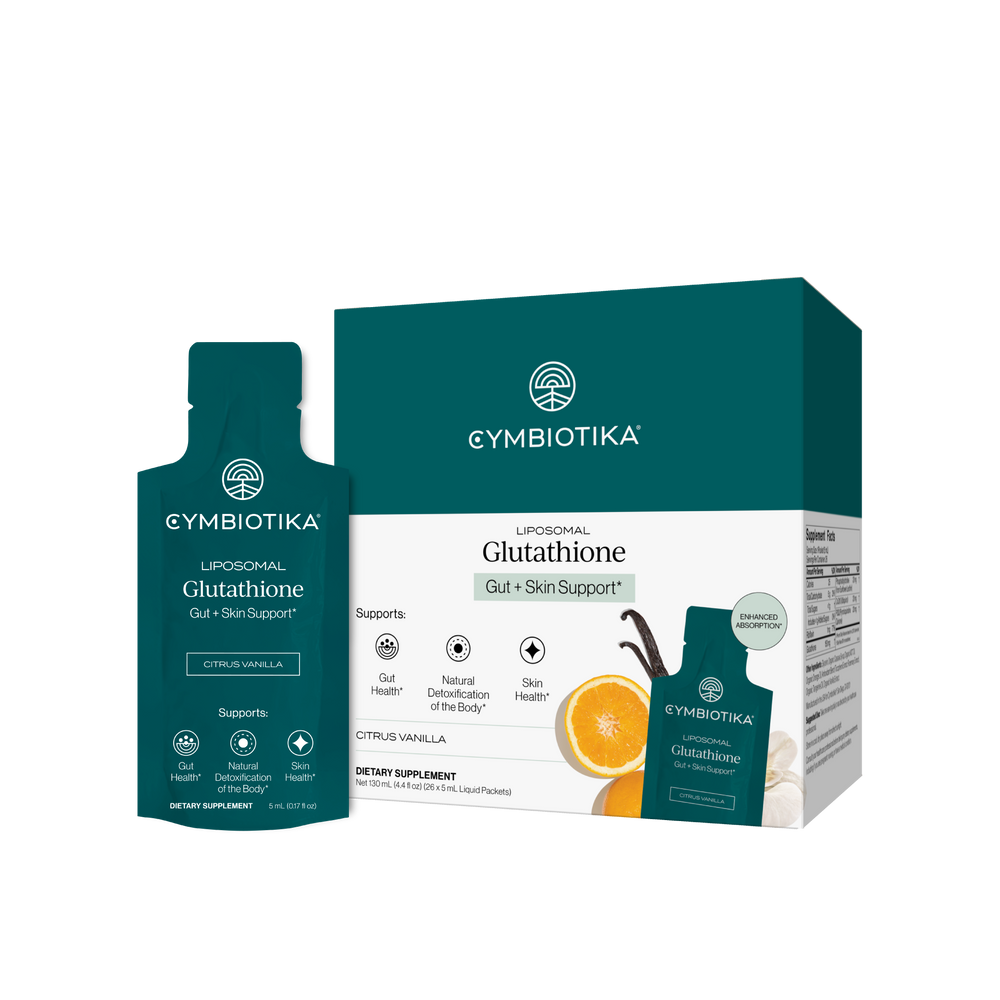
Our Liposomal Vitamin C and Liposomal Glutathione are designed specifically to be taken together. By using the same liposomal technology for both, you ensure that the delivery systems are compatible and focused on cellular-level uptake.
Step-by-Step: Building Your Morning Stack
If you are ready to start this pairing, follow these steps to integrate it into your life:
- Step 1: Prepare your space. / Keep your supplements near your water glass or coffee station so you remember them first thing.
- Step 2: Take on an empty stomach. / Measure your dose of liposomal glutathione and vitamin C. You can take them directly from a spoon or mix them into a small amount of water or juice.
- Step 3: Wait before eating. / Give the nutrients about 20 minutes to begin the absorption process before consuming a full meal.
- Step 4: Stay hydrated. / Drink plenty of water throughout the morning to support your body's natural detoxification pathways.
Maximizing Results with Lifestyle Habits
Supplements work best when they are part of a holistic approach to health. To help your body maintain its glutathione levels naturally, consider these lifestyle adjustments:
Focus on Sulfur-Rich Foods Your body needs sulfur to produce its own glutathione. Incorporating cruciferous vegetables like broccoli, Brussels sprouts, and cauliflower can provide the raw materials your system needs. Garlic and onions are also excellent additions to your diet.
Prioritize Sleep Oxidative stress naturally increases when we are sleep-deprived. During deep sleep, your body focuses on repair and replenishment. Regular, high-quality rest can help maintain your internal antioxidant stores.
Manage Physical Stress While exercise is healthy, overtraining can deplete glutathione levels. If you are an athlete or highly active, taking glutathione and vitamin C together may help support recovery and keep your immune system resilient.
Myth: Taking more milligrams always means better results. Fact: Higher doses do not equate to higher levels in the body if the delivery system is poor. Bioavailability and consistent, moderate dosing are more effective than high-dose standard capsules that the body cannot absorb.
What to Expect and How to Stay Consistent
Wellness is a marathon, not a sprint. You may not feel a dramatic shift on day one, and that is normal. Most people begin to notice the benefits of a glutathione and vitamin C routine after three to four weeks of consistent use.
You might notice more stable energy levels throughout the day. Some people find that their skin appears brighter or that they recover more quickly from seasonal challenges. These are signs that their cellular defense system is getting the support it needs.
If you miss a day, do not worry. Simply pick up your routine the next morning. Avoid "doubling up" on doses to make up for a missed day, as your body can only process a certain amount at once.
The Importance of Quality Sourcing
When you are putting something into your body daily, you deserve to know it is clean. Many supplements on the market contain synthetic fillers, artificial flavors, or GMO ingredients. These can add a burden to the very systems you are trying to support.
We prioritize transparency in every formulation. Our products are third-party tested to ensure they meet the highest standards for purity and potency. By removing unnecessary additives, we ensure that the focus remains entirely on the active nutrients and the liposomal technology that delivers them.
Bottom line: Taking glutathione and vitamin C together is a smart, science-backed way to support your body's antioxidant network, provided you prioritize bioavailable formats like liposomes.
Conclusion
The combination of glutathione and vitamin C is a powerful example of how nutrients can work together to create a result greater than the sum of their parts. By focusing on high-absorption liposomal delivery and consistent morning timing, you give your cells the tools they need to thrive.
At Cymbiotika, our mission is to empower you with the most advanced nutritional tools available. We believe that when you understand the "why" behind your supplements, you are better equipped to build a routine that lasts. Whether you are looking to support your immune system, your liver, or your overall cellular health, this pairing is a foundation you can trust.
If you are unsure where to start your journey, we invite you to take our Health Quiz. It is designed to provide personalized recommendations based on your unique goals and lifestyle, helping you build a stack that is perfectly tailored to your needs.
FAQ
Can I take glutathione and vitamin C at the same time?
Yes, it is highly recommended to take them together. Vitamin C helps recycle glutathione back into its active state, which may enhance the overall antioxidant protection in your body. Taking them at the same time ensures both nutrients are available for this synergistic cycle.
Is it better to take these supplements on an empty stomach?
For the best results, particularly with liposomal formats, take them about 20 minutes before a meal. This allows the nutrients to be absorbed more efficiently without interference from food. However, if you have a sensitive stomach, a small snack is perfectly fine.
How much vitamin C should I take with glutathione?
While individual needs vary, a common approach is a 1:2 ratio, such as 500mg of vitamin C for every 250mg of glutathione. It is always best to follow the specific instructions on your product label and consult with a healthcare professional to determine the right amount for your specific health goals.
Why should I choose liposomal supplements over standard pills?
Standard glutathione and vitamin C are often poorly absorbed because they are broken down by the digestive system or flushed out quickly. Liposomal delivery wraps the nutrients in a protective lipid layer, which is designed to bypass harsh digestive juices and support absorption directly into the cells.