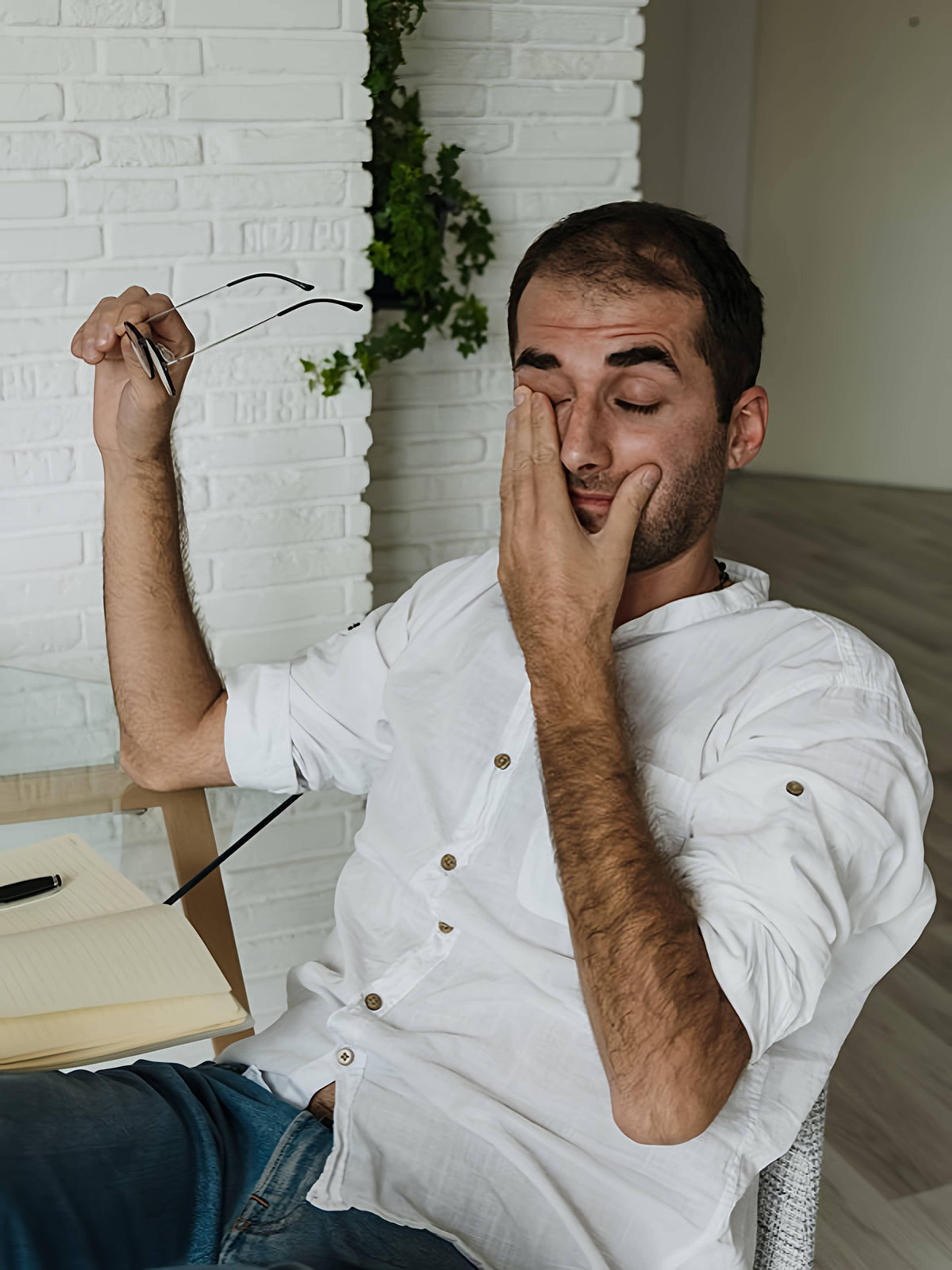
Whether you’re suffering from a sleep problem like a temporary bout of insomnia because of an upcoming event or your New Year’s Eve celebration went well past the strike of midnight, skimping on adequate sleep can have a negative impact on nearly every physical and mental function.
Fortunately, there are dozens of ways to naturally encourage a better night’s sleep—a topic we’ll jump into after covering the consequences of cutting corners on your rest.
Create your own custom bundle and save up to 30%. Take our quiz!
#1 You May Experience Feelings of Mania
We all know that staying up late too many nights in a row can take a massive toll on our moods. We also tend to think that having less-than-stellar quality sleep may naturally translate to feeling sluggish the next day.
In some cases, however, the opposite occurs and people, perhaps you included, may feel a slightly elevated mood and experience a mild, though fleeting, bout of mania. One theory is that acute sleep deprivation triggers the release of specific neurotransmitters and hormones that play a role in keeping you awake.
For those who have bipolar disorder, a lack of deep sleep can both precede a manic episode and be a symptom of it.
Either way, it reinforces just how important sufficient sleep is to keep our mental health in check.
#2 Your Skin May Suffer
We’d hazard to say that “beauty sleep” became a cliche for a reason: a mounting body of research reveals that little sleep can mess with your skin. Specifically, it may cause:
- Acne
- Rashes
- Hyperpigmentation
- Decreased skin elasticity
- Dark, under-eye circles
- Puffiness
- Fine lines and wrinkles
From cell regeneration to the secretion of skin-saving hormones, your body performs the majority of its reparative tasks on your skin while you dream.
#3 …and Your Hair Might Too
Your body manufactures and releases a handful of hormones while you sleep, including growth hormones—chemical messengers that are crucial for regulating your metabolism and ensuring your muscles and bones remain strong.
This hormone also influences the health and integrity of your hair. If your body isn’t given the chance to produce adequate amounts of it, you may find your hair looking and feeling dull and limp.
This is compounded by the fact that a lack of sufficient sleep compromises your ability to generate keratin, a protein that’s key to maintaining your mane’s shine and strength.
#4 You May Be More Emotionally Reactive—Or More Emotional, Period
Feeling short-tempered after a night of tossing and turning? You’re not alone. Insufficient sleep can do a number on your mood, increasing any or all of the following:
- Anxiety
- Feelings of depression
- Irritability
- Impatience
- Difficulty with decision-making
- Reduced creativity
While these may feel aggravating but tolerable, chronic sleep deprivation can provoke more serious mental health complications, including hallucinations, paranoia, impulsive behavior, risky choices, and suicidal thoughts.
This is all due to the disruption a lack of adequate sleep has on your central nervous system—a biologically significant part of your body that helps ensure your information processes run smoothly.
#5 Your Risk of Getting Into a Car Accident Could Increase
Sleep and reaction time go hand in hand.
Whether you’re up all night shooting to meet a deadline or tending to your sick child, your reaction time may slow and render you more prone to getting into an accident. Indeed, some deem driving while sleep-deprived as dangerous as drinking under the influence of drugs or alcohol—and may be responsible for 21% of fatal car crashes per year.
What’s more, total sleep deprivation can raise your risk of micro-sleeping, or falling asleep for a few seconds throughout the day. It goes without saying that this could be detrimental while driving.
#6 Your Clothes May Begin to Feel Tighter
Have you ever pulled an all-nighter and felt positively, inexplicably ravenous the next day?
Sleep problems may affect ghrelin and leptin, two hormones that influence feelings of hunger and satiation.
A lack of sleep also affects your production of serotonin—a key neurotransmitter that impacts your mood. If your serotonin levels dip, you may experience an intense craving for carbs like donuts, bagels, crackers, and chips, which is totally natural, as your brain and body are trying to revive themselves.
While an isolated day or two of overeating probably won’t cause you to gain weight, subsisting on short amounts of sleep and eating to make up for these energy drops may add up over time.
At the same time, exhaustion from a lack of sleep can make your sofa and Roku remote seem far more desirable than a trip to the gym and dissuade you from staying on top of exercise (which, we should point out, contributes to a better night’s sleep).
#7 You Just Can’t Crush Your Winter Cold
A runny nose, a scratchy throat, a mild fever that comes and goes is rarely a recipe for quality sleep.
That said, while you rest, your body works to strengthen your immune system. If it doesn’t have enough time to do so, or if it keeps getting interrupted while it’s doing its job, you may have a more challenging time combating pathogens or recovering from a cold.
#8 The Simplest Things Seem Outrageously Difficult
Whether you’re typing out an email or working a blender for a mid-morning smoothie, poor sleep can make even the most quotidian and familiar activities feel insurmountable. Your brain needs sleep to keep your working memory in tip-top shape.
Sleep loss doesn’t just make instructions on a new app seem like quantum physics. It can also cause:
- Difficulty concentrating
- A shorter attention span
- Decreased work performance
- Poor decisions (and a disregard for their consequences)
- Trouble learning and forming new memories
Luckily, you don’t need to leave your brain and body in a lurch: Getting sufficient rest can be simpler and more attainable than you might think.