Table of Contents
- Introduction
- Defining Somatic Integration
- The Role of the Nervous System
- Why Bioavailability Matters for Integration
- The Connection Between Gut Health and Sensation
- Practical Strategies for Somatic Awareness
- Nutritional Support for a Resilient Soma
- Building a Sustainable Routine
- The Role of Movement in Integration
- Obstacles to Somatic Integration
- Conclusion
- FAQ
Introduction
You may have had days where you feel entirely disconnected from your physical self. Perhaps you are staring at a screen for hours, lost in a loop of thoughts, only to realize your shoulders are hunched and your jaw is tightly clenched. This gap between what the mind thinks and what the body feels is where many of us live most of our lives.
Somatic integration is the process of closing that gap. It is a practice of reconnecting your cognitive awareness with your physical sensations to create a more unified sense of self. At Cymbiotika, we believe that true wellness is not just about what you think or what you eat, but how your body processes and integrates every experience.
This article covers the biological foundations of somatic integration, why the mind-body connection often breaks down, and how you can use practical tools and high-quality nutrition to support a more integrated life. By understanding how your nervous system and your physical body communicate, you can begin to build a routine that supports lasting balance.
Defining Somatic Integration
To understand somatic integration, we must first look at the word "somatic." It comes from the Greek word soma, which means "the living body." Unlike "physical," which can refer to the body as an object, somatic refers to the body as it is perceived from within.
Integration is the act of bringing separate parts together into a whole. In a wellness context, this means your thoughts, emotions, and physical sensations are no longer operating in silos. You aren't just "thinking" about being stressed; you are aware of how that stress feels in your chest or your gut, and you have the tools to address it.
Most of us are conditioned to prioritize "top-down" processing. This is where the brain tells the body what to do, how to feel, and when to keep going despite exhaustion. Somatic integration emphasizes "bottom-up" processing. This approach listens to the signals the body sends to the brain, recognizing that the body often knows we are overwhelmed before the mind consciously admits it.
Key Takeaway: Somatic integration is the practice of aligning your internal physical sensations with your conscious mind to support a regulated nervous system.
The Role of the Nervous System
The foundation of somatic integration lies in the nervous system. Specifically, it involves the Autonomic Nervous System (ANS), which governs involuntary functions like heart rate, digestion, and respiratory rate. The ANS has two primary branches that must work in harmony for us to feel integrated.
The sympathetic branch is often called the "fight or flight" system. It prepares the body for action. The parasympathetic branch is known as the "rest and digest" system, allowing the body to recover and maintain balance. Somatic integration helps you move more fluidly between these states.
When we are not integrated, we might get "stuck" in a sympathetic state. This manifests as physical tension, shallow breathing, and a racing mind. We become less aware of our body's actual needs because the brain is busy scanning for external threats or stressors. Integration involves training the brain to recognize physical cues of safety, which allows the parasympathetic system to take over.
The Power of Interoception
Interoception is often called the "sixth sense." It is the ability to sense the internal state of your body. This includes feeling your heartbeat, noticing hunger cues, or sensing the temperature of your skin.
Many people have a dampened sense of interoception due to modern distractions. We ignore the urge to stretch, the need for water, or the feeling of fatigue. Developing interoception is a critical step in somatic integration. When you can accurately feel what is happening inside you, you can respond to those needs before they turn into significant discomfort.
Why Bioavailability Matters for Integration
For the nervous system to communicate effectively, it requires specific nutrients. However, the quality and format of these nutrients change how well your body can actually use them. Bioavailability refers to the amount of a substance that enters your circulation and is able to have an active effect.
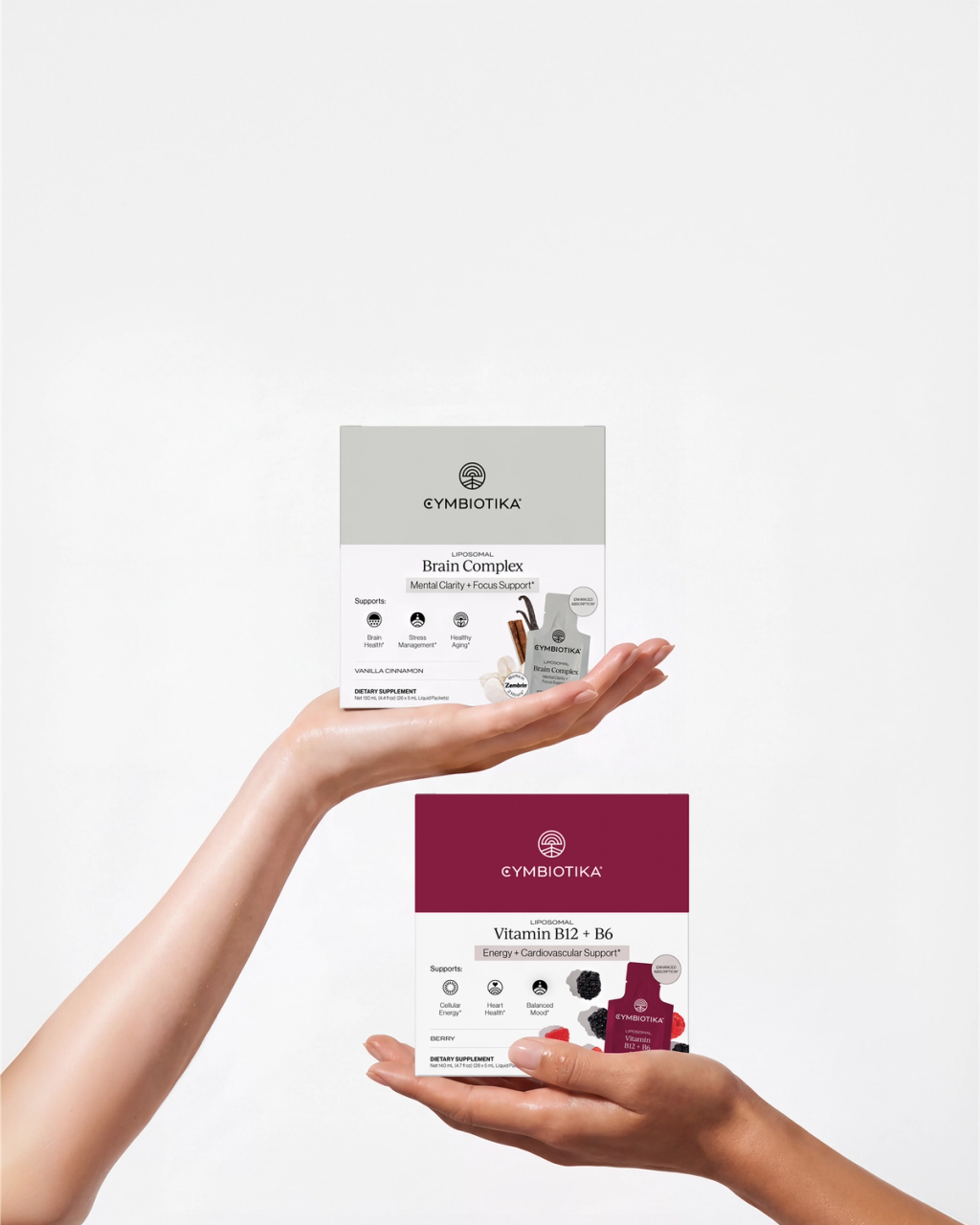
If your nervous system is struggling to stay regulated, it might be due to a lack of foundational support. For example, the "insulation" around your nerves, called the myelin sheath, requires B vitamins and healthy fats to function. If you take a standard supplement with low bioavailability, your body may only absorb a small fraction of what is on the label. A formula like Liposomal Vitamin B12 + B6 is designed with active forms of B vitamins in a format that supports absorption.
We focus on advanced delivery methods, such as liposomal delivery, to support better absorption. A liposomal delivery system uses a phospholipid bilayer—a tiny bubble made of the same material as your cell membranes—to protect nutrients as they pass through the digestive tract. This is designed to help the nutrients reach the cells where they are needed most. Without proper nutrient absorption, the physical "wiring" for somatic integration may lack the resources it needs to stay resilient.
The Connection Between Gut Health and Sensation
The gut is often referred to as the "second brain." This is because the gut and the brain are constantly communicating via the Vagus nerve. This nerve is a primary highway for somatic information.
If your gut microbiome is out of balance, it can send "noisy" or distressed signals to your brain. This can make it difficult to feel calm or integrated. Supporting the gut lining and the microbiome is a physical way to improve somatic clarity. Exploring our Gut Health Supplements can be a helpful place to start when you want to support this foundation.
When the digestive environment is healthy, the signals sent to the brain are clearer. This makes it easier to distinguish between a "gut feeling" (intuition) and digestive discomfort. Using tools like our Liquid Colostrum can support the structural integrity of the gut, which in turn supports the quality of the information traveling up the Vagus nerve to the brain.
Key Takeaway: A healthy gut provides a clearer communication channel for the nervous system, making it easier to practice somatic awareness.
Practical Strategies for Somatic Awareness
Somatic integration is not something you achieve once; it is a skill you build through daily habits. You can start by incorporating small "micro-moments" of awareness into your routine. These do not require a meditation cushion or hours of free time.
The Body Scan
One of the most effective tools for integration is the body scan. You can do this while sitting at your desk or lying in bed.
- Start at your toes: Notice any sensation there. Is it warmth, tingling, or nothing at all?
- Move upward: Slowly shift your attention to your ankles, calves, and knees.
- Notice tension: As you reach your hips and stomach, notice if you are "holding" your breath or bracing your muscles.
- Observe without judgment: If you find tension, you don't need to force it to go away. Simply acknowledging it is the first step of integration.
- Reach the crown of your head: Finish by noticing the muscles in your face and jaw.
Grounding Through the Senses
When your mind is racing, you are disconnected from the "soma." Grounding pulls you back into the present moment. A common technique is the 5-4-3-2-1 method:
- Identify 5 things you see.
- Identify 4 things you can touch.
- Identify 3 things you hear.
- Identify 2 things you can smell.
- Identify 1 thing you can taste.
This practice forces the brain to process information from the physical environment, which helps settle the nervous system and fosters a sense of integration.
Nutritional Support for a Resilient Soma
While mental practices are vital, the physical body must be capable of maintaining a calm state. If your mineral levels are depleted, your muscles may stay in a state of contraction, making it nearly impossible to feel "relaxed" or integrated.
Magnesium for Nervous System Support
Magnesium is involved in over 300 biochemical reactions in the body, many of which relate to muscle relaxation and nervous system regulation. Many people find that they are deficient in this mineral because modern soil is often depleted.
Using a high-quality Liposomal Magnesium Complex can help provide the raw materials your body needs to switch from a "fight or flight" state into a "rest and digest" state. When your muscles are physically able to let go of tension, the mind receives a signal that it is safe to relax. Our magnesium is designed for high absorption, ensuring your cells actually receive the mineral rather than it simply passing through your system.
Adaptogens and Resilience
Adaptogens are natural substances that help the body adapt to stress and maintain balance. One of the most potent adaptogens is Shilajit. Exploring our Energy Supplements can help you find formulas that fit a more energized daily rhythm.
These minerals act as electrolytes, supporting the electrical signaling between your brain and your body. When these signals are clear and fast, your somatic awareness improves. You become more "in tune" with your physical responses to the world around you.
Myth: Supplements work the same regardless of how they are made.
Fact: The delivery method and purity of ingredients determine how much your body can actually use. Standard capsules often have poor bioavailability compared to liposomal or resin-based formats.
Building a Sustainable Routine
Somatic integration thrives on consistency over intensity. It is better to check in with your body for one minute, five times a day, than to do a single hour-long session once a week.
Step 1: Morning Check-in. / Before you check your phone, notice the weight of your body on the mattress. Take three deep breaths into your belly.
Step 2: Support the Foundation. / Take your foundational supplements, like Liposomal Vitamin B12 + B6, to support cellular energy and neurological health from the start of the day.
Step 3: Mid-day Reset. / During your lunch break, walk barefoot if possible or simply notice the feeling of your feet on the floor. This is a quick somatic grounding technique.
Step 4: Evening Wind-down. / Use Liposomal Sleep or magnesium to help the body physically transition into a state of recovery.
By layering these physical supports with mindful awareness, you create an environment where somatic integration becomes your natural state.
The Role of Movement in Integration
Exercise is often viewed as a way to change how the body looks. In somatic integration, movement is used to change how the body feels.
Traditional exercise can sometimes be "dissociative." For example, you might run on a treadmill while watching TV or listening to a podcast to distract yourself from the effort. While this has cardiovascular benefits, it doesn't support integration.
Somatic movement involves moving with full attention on the internal sensation. This could be slow yoga, Tai Chi, or even just stretching while focusing on the specific muscle being engaged. The goal is to feel the movement from the inside out. This strengthens the neural pathways between the brain and the body, making you more resilient to daily stressors.
Obstacles to Somatic Integration
It is important to acknowledge that staying integrated is challenging. We live in a world designed to keep us "in our heads."
- Digital Overload: Constant notifications keep us in a state of hyper-vigilance.
- Sedentary Lifestyle: Sitting for long periods can "numb" our physical sensations.
- High Stress: When we are overwhelmed, the brain may naturally try to disconnect from the body to cope with discomfort.
If you find it difficult to feel your body or stay grounded, know that results vary and it takes time to rebuild these pathways. Consistency in your routine—both in your mindfulness practices and your nutritional choices—is the key to making progress.
Conclusion
Somatic integration is a journey toward becoming more present in your own life. It is the shift from living entirely in your thoughts to living fully in your body. By supporting your nervous system with bioavailable nutrients and practicing regular self-awareness, you can cultivate a sense of balance that holds up even during stressful times.
At Cymbiotika, our mission is to empower you with the tools and knowledge to take ownership of your health. We focus on transparency and science-forward formulations because we know that when your body has what it needs, your mind can follow. Wellness is about more than just checking boxes; it is about building a routine that feels right for you.
- Focus on bioavailability to ensure your nervous system gets the support it needs.
- Practice interoception by checking in with your physical sensations throughout the day.
- Prioritize consistency in both movement and supplementation.
Key Takeaway: Somatic integration is the bridge between mental awareness and physical health. Supporting your body's "wiring" with high-quality nutrition makes this bridge easier to build and maintain.
If you are looking for a personalized starting point for your wellness journey, we recommend taking our Health Quiz. It is designed to help you identify which formulations will best support your unique needs and goals.
FAQ
What is the difference between somatic integration and mindfulness?
Mindfulness is a broad practice of being present and aware of thoughts and surroundings. Somatic integration is a specific type of mindfulness that focuses specifically on the internal sensations of the body and how they relate to the mind. It emphasizes the "bottom-up" approach of listening to the body to inform the mind, rather than just observing thoughts.
How long does it take to feel the effects of somatic integration?
The experience of somatic integration is different for everyone. Some people feel a sense of "grounding" or relief after just one session of deep breathing or a body scan. However, rebuilding the connection between the brain and the body is a long-term process that often takes weeks or months of consistent practice to become a natural habit.
Can supplements really help with mind-body connection?
Supplements do not "create" the connection, but they provide the physical foundation for it. For example, minerals like magnesium support muscle relaxation, and B vitamins support the health of the nerves that carry signals between the body and brain. When your body is nutritionally supported, it is physically easier to enter a state of relaxation and awareness.
Do I need professional training to practice somatic integration?
While there are professional somatic therapists, you can begin practicing somatic integration on your own through simple awareness techniques. Starting with body scans, intentional breathing, and mindful movement is an excellent way to build your "interoceptive" muscles. If you find the process overwhelming, consulting a professional can provide additional guidance tailored to your specific needs.
*These statements have not been evaluated by the Food and Drug Administration. This product is not intended to diagnose, treat, cure, or prevent any disease.